The Beginner’s Guide to Positive Reinforcement Training
This guide reflects the positive reinforcement approach recommended by most modern professional trainers and veterinary behaviorists. For persistent or serious behavior issues, a certified trainer can offer guidance tailored to your dog.
Positive reinforcement training has become the widely recommended standard approach among modern trainers and behaviorists, and for good reason, it builds genuine trust between you and your dog while producing reliable, lasting results. Understanding the core principles behind this approach, not just the basic mechanics, helps you apply it effectively across whatever specific training challenges come up.
This guide covers the fundamentals of positive reinforcement training, giving you a real foundation to build from regardless of your dog’s age or your previous training experience, whether you’re starting with a young puppy or working through our tips built specifically for puppy training.
Understanding the Core Principle
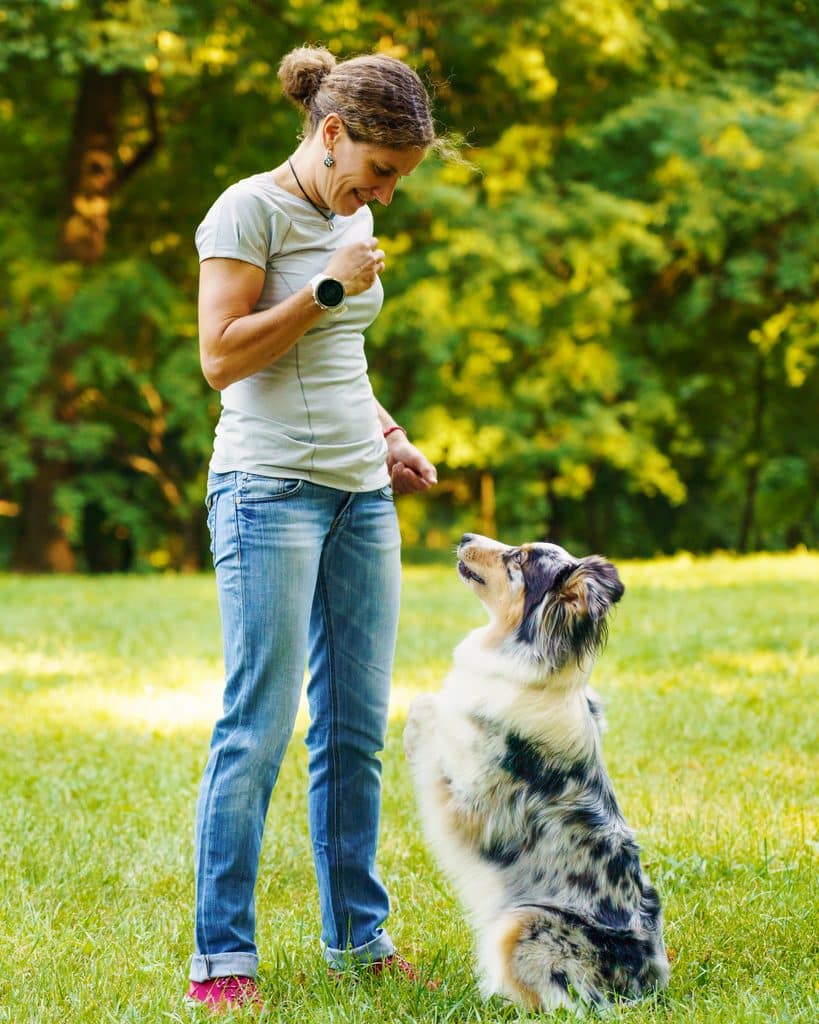
Positive reinforcement training works by rewarding desired behaviors, making them more likely to be repeated, rather than punishing unwanted behaviors. The core idea is straightforward, behaviors that are rewarded tend to increase, while behaviors that aren’t reinforced tend to naturally decrease over time.
This approach stands in contrast to purely correction-based training methods, and the research consistently supports positive reinforcement as producing more reliable results with fewer negative side effects like fear or anxiety.
Choosing Effective Rewards
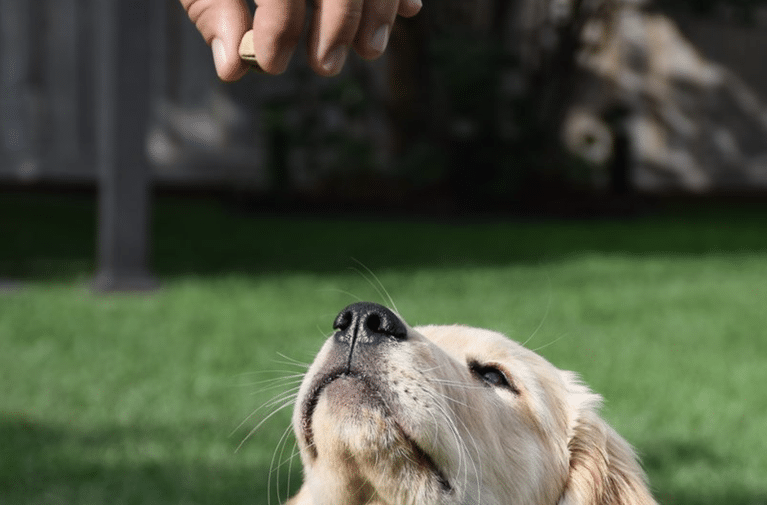
Not every dog is motivated by the same reward, and identifying what genuinely motivates your specific dog, food, praise, play, access to something they want, matters for effective training. Food rewards tend to be particularly effective for teaching new behaviors, given their immediate, clear value to most dogs.
Experiment with different reward types and note what produces the most enthusiastic response, this individual variation matters more than people sometimes expect.
Understanding Timing and Its Importance
Timing is genuinely one of the most critical elements of effective positive reinforcement training, a reward needs to happen within about one to two seconds of the desired behavior for a dog to make the clear connection between action and consequence. Delayed rewards risk reinforcing whatever behavior happened in the intervening moments instead.
If your timing feels imprecise, a training tool like a clicker can help mark the exact moment of desired behavior, even if the actual treat follows a moment later, since the click itself becomes a reliable, precise marker.
[INSERT IMAGE: reward-timing-window.png]
Introducing the Concept of Marker Training
Marker training, using a specific sound or word, often a clicker, to mark the exact moment a dog performs a desired behavior, adds real precision to positive reinforcement training. The marker bridges the gap between the behavior and the reward, allowing for accurate timing even when delivering an actual treat takes a moment longer.
If you choose to use a clicker, “charge” it first by clicking and immediately treating several times in a row before using it for actual training, this builds the clear association between the click sound and an incoming reward.
Breaking Behaviors Into Manageable Steps
Complex behaviors are often easier to teach when broken into smaller, achievable steps, rewarding incremental progress toward the final goal rather than expecting the full behavior immediately. This approach, sometimes called shaping, keeps training genuinely achievable and maintains motivation throughout the learning process.
Be patient with this incremental process, rushing toward the final behavior before smaller steps are solid tends to create confusion and slow overall progress.
Understanding Reinforcement Schedules
Once a behavior is well established, gradually shifting from rewarding every single correct response to a more intermittent schedule actually strengthens the behavior’s reliability over time, a well-documented principle in behavioral learning. This shift should happen gradually, not abruptly, to maintain consistent performance.
Continue occasional reinforcement even for well-established behaviors, completely eliminating rewards can lead to a gradual decline in reliability over time.
Addressing Unwanted Behaviors Within a Positive Framework
Positive reinforcement training doesn’t mean ignoring unwanted behaviors entirely, it means addressing them by reinforcing an incompatible desired behavior and managing the environment to prevent unwanted behaviors from being reinforced accidentally. This is different from purely permissive training.
For example, rather than punishing jumping, consistently reward and reinforce a sit as an alternative greeting behavior, this approach addresses the unwanted behavior while building something positive in its place.
Managing Your Own Consistency
Positive reinforcement training requires genuine consistency from you, rewarding desired behaviors reliably and avoiding accidentally reinforcing unwanted ones. This consistency is often the most challenging element for new trainers to maintain, more challenging than any specific technique.
Involve everyone in your household in understanding basic positive reinforcement principles, inconsistent approaches between different people considerably slow overall training progress.
Recognizing When Professional Support Helps
While many behaviors respond well to positive reinforcement principles applied independently, some challenges, particularly more complex behavioral issues, benefit actually from professional guidance from a certified positive reinforcement trainer. This isn’t a sign of failure, complex behavior benefits from experienced, tailored guidance.
Look specifically for trainers who identify as positive reinforcement or force-free trainers if you’re seeking professional support, this ensures alignment with the approach covered in this guide.
Building Long-Term Success
Positive reinforcement training isn’t just a technique for teaching specific commands, it’s a foundation for your entire relationship with your dog, built on trust and clear communication rather than fear or intimidation. This foundation pays dividends across every aspect of your dog’s behavior and your relationship, not just formal training sessions.
Continue applying these principles throughout your dog’s life, not just during initial training, this ongoing consistency is really what produces the reliable, well-adjusted behavior most owners are hoping for.
A Simple Training Session Checklist
Before starting any training session, a quick mental checklist helps set both you and your dog up for a productive few minutes rather than a frustrating one.
| Check | Why It Matters |
|---|---|
| Is my dog truly hungry or motivated right now? | A full, disinterested dog won’t respond well to food rewards |
| Do I have rewards ready and easily accessible? | Fumbling for treats ruins precise timing |
| Is the environment low-distraction enough for this skill level? | New skills need quieter settings than well-established ones |
| Do I have a clear, single goal for this session? | Vague sessions produce vague, inconsistent results |
| Am I prepared to end on a success, even a small one? | Ending on struggle undermines the whole session’s value |
Running through this before each session takes seconds and meaningfully improves how productive that time actually turns out to be.
Common Positive Reinforcement Mistakes Worth Avoiding
Rewarding too late: Even a two or three second delay can accidentally reinforce the wrong behavior, use a marker word or clicker if your timing needs support.
Using the same reward for everything: Low-value rewards work fine for known behaviors, but new or difficult skills usually need something more motivating.
Training for too long: Sessions that run past your dog’s attention span produce diminishing returns and can build frustration rather than progress.
Accidentally reinforcing unwanted behavior: Giving attention, even negative attention, to unwanted behavior can reinforce it just as effectively as a treat would reinforce a wanted one.
Inconsistency between household members: A behavior reinforced by one person and ignored by another sends confusing, contradictory signals that slow overall progress.
Applying These Principles Beyond Basic Commands
Positive reinforcement isn’t limited to teaching sit and stay, the same principles apply to leash manners, calm greetings, settling on cue, and most other behaviors you’d want to encourage. The mechanics stay the same regardless of the specific behavior: identify what you want more of, reward it precisely and consistently, and manage the environment to prevent the opposite behavior from being accidentally reinforced instead.
Once these core mechanics feel natural, you’ll likely find yourself applying them almost automatically across a much wider range of everyday situations with your dog.
Final Thoughts
Positive reinforcement training, understood at a genuine principle level rather than just a collection of specific techniques, provides a reliable, humane foundation for training any dog at any life stage. Understanding reward selection, precise timing, incremental shaping, and genuine consistency together create an approach that produces lasting results while building real trust between you and your dog.
If you’re new to this approach, start with a simple, well-understood behavior, a basic sit or come, to practice the core mechanics before applying these principles to more complex training challenges. Building genuine confidence with the fundamentals first makes everything that follows considerably more effective. These same principles are exactly what we lean on in our post on fixing common behavior problems, so the two guides work well read together.